
Lillian Bassman: The Grand Dame Of Fashion Photography
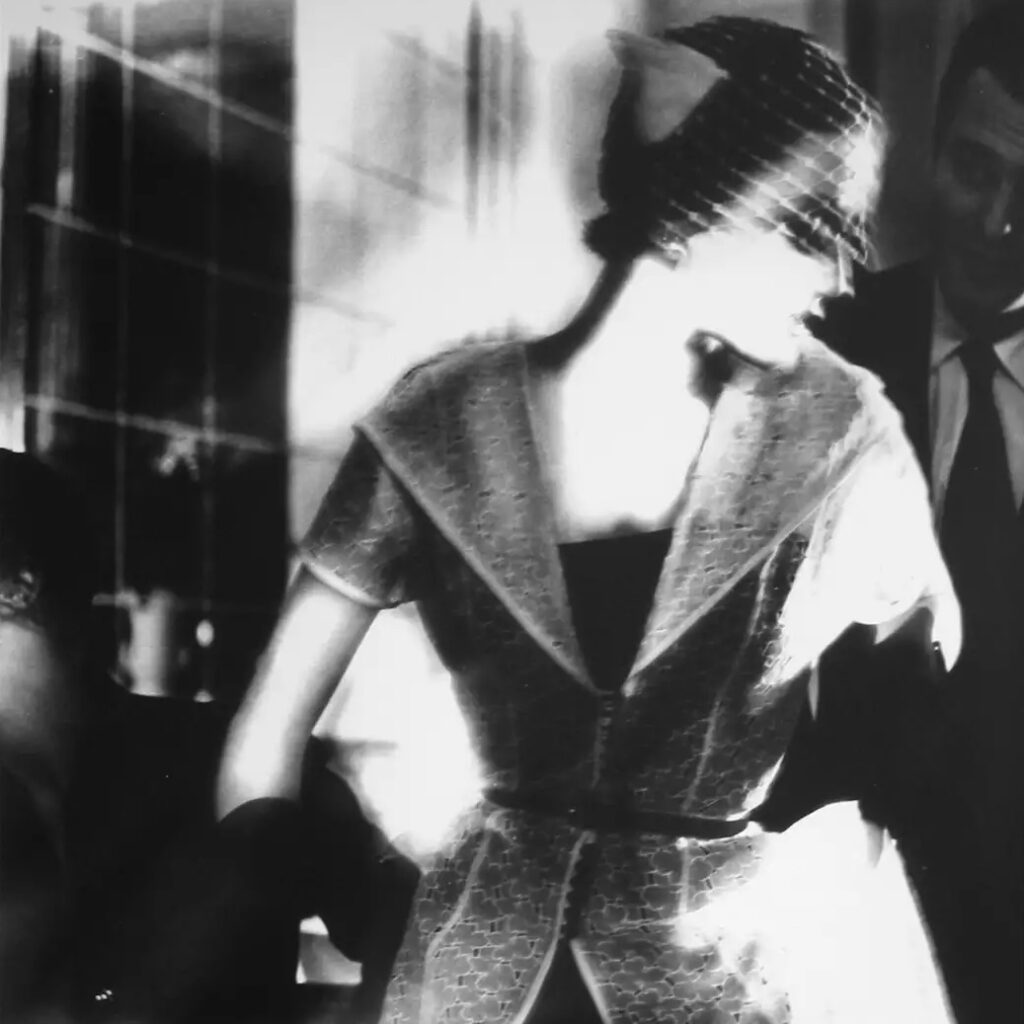
Lillian Bassman was a pioneering force in fashion history, celebrated for her distinctive, high-contrast black-and-white images that often pushed the boundaries of traditional fashion photography. Her signature style captured the elegance of fashion while imbuing it with a sense of mystery and emotional depth. Unlike many of her contemporaries who adhered to the polished, symmetrical aesthetics of mainstream fashion photography, Bassman favored an approach that was more experimental and evocative. She frequently used shadows and dramatic lighting to obscure parts of her subjects, blurring the line between fashion and fine art.
Born in 1917 in Brooklyn, Bassman studied textile design in high school and modeled for the Art Students League. She joined the Works Progress Administration in 1934 and then studied fashion illustration at the prestigious Pratt Institute. In 1940, Alexey Brodovitch, the legendary art director at Harper’s Bazaar, offered her a scholarship to study with him at The New School for Social Research and encouraged her to pursue graphic design. Shortly after, Bassman became Brodovitch’s first salaried assistant and was soon appointed as co-art director at Junior Bazaar, a short-lived Hearst publication aimed at teenage girls. Before Bassman picked up the camera, she had an affinity for the dark room and various printing techniques, which she began experimenting with on George Hoyningen-Huene’s negatives. ‘Unusual for a photographer,’ her son, Eric Himmel said. ‘Lillian developed a darkroom technique before she felt compelled to take up a camera. Her fine art experience led her to view a print as the end product of a studio process’. Lillian Bassman herself, on the other hand, described her interest in the darkroom as ‘creating a new kind of vision aside from what the camera saw.’
From art director to fashion photographer
Bassman’s transition from art director to fashion photographer was remarkably rapid. Her first photograph was published in 1946, first editorial story in the Bazaar was published in 1948; and in 1949, she went to Paris with then Editor-in-Chief, Carmel Snow, to photograph the Fall collections. Beginning in the late 1940s, Bassman’s images appeared in almost every Harper’s Bazaar issue, and she became highly sought after for her expressive portraits of slender, long-necked models advertising lingerie and evening wear. In a field dominated by men, her images revolutionized fashion photography by moving away from the rigid, institutional aesthetic and instead introducing a sensuality and intimacy that had not yet been seen. Her sittings weren’t sexually charged as they were with male photographers. ‘The models always felt that I was one of them’, Bassman said. ‘They would tell me their stories as they had their hair and makeup done. They never had to seduce me in the way they had to seduce men.’ In return, she redefined feminine elegance in her own terms: graceful models with long, swanlike necks appearing as though dreamy ghosts were floating in her pictures.

Experimentations in the darkroom
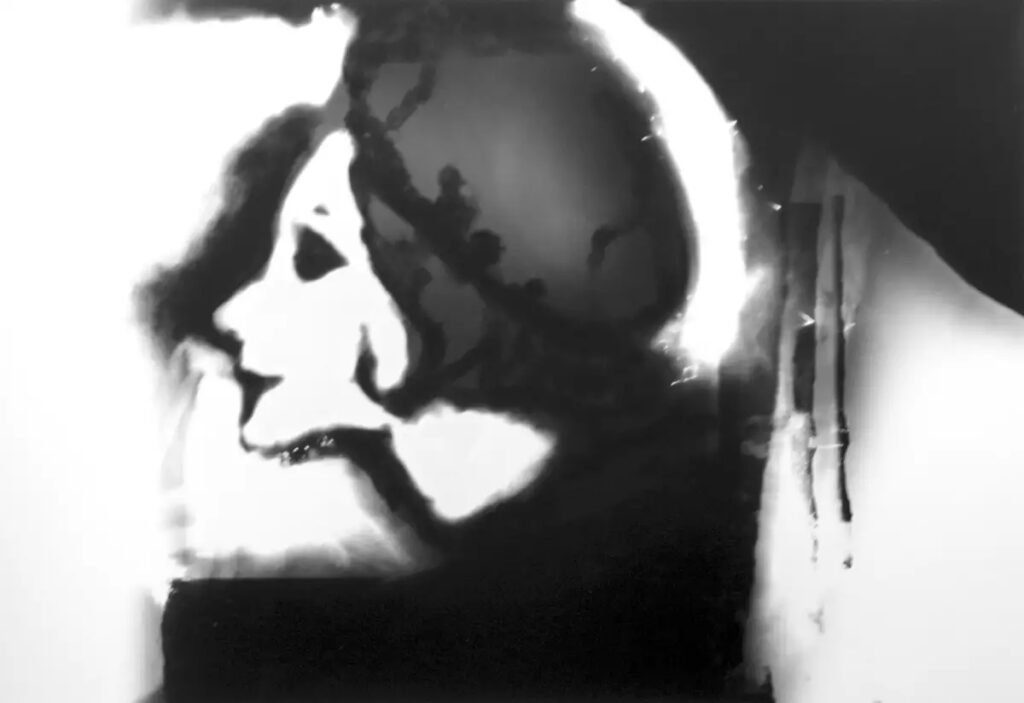
Once named as one of the grand masters of fashion photography by Vanity Fair, Lillian Bassman’s innovation in fashion photography extended far beyond her creative direction and composition; it was in the darkroom where she truly redefined the medium. While many photographers of her time adhered to traditional photographic techniques, Bassman used the darkroom as a canvas to manipulate and transform her images. One of her most notable techniques was the heavy use of contrast, where she would deliberately burn and dodge certain areas of the print to create a dramatic interplay between light and shadow. This not only emphasized the texture and form of the clothing and model but also imparted a sense of mystery and atmosphere that was rare in the commercial fashion work of the era. Bassman’s darkroom process also involved softening the image, often blurring parts of the photograph to create a dreamlike quality. She would sometimes manipulate the negatives themselves, either by enlarging certain portions of the image or by applying subtle filters to create a sense of softness that contrasted with the sharp, crisp lines typically associated with fashion imagery. Her experimentation with exposure and printing techniques resulted in ethereal, almost abstract photographs. In an interview for The New York Times in 1997, Bassman said that she wanted to ‘take the hardness out of photography’, which she was able to do so by creating such dramatic pictorial atmospheres through her experimentations in the darkroom.
By 1970, Lillian Bassman had become discouraged by the changing fashion industry. She abandoned photography and destroyed decades’ worth of commercial negatives, only keeping a selection of editorial ones. Instead, for private satisfaction, she photographed semi-abstracts. In the early 1990s, Martin Harrison, fashion curator and historian, discovered the long-forgotten negatives and encouraged her to pursue photography again. Bassman began reprinting the negatives, this time making use of new technologies and applying darkroom techniques both manually and digitally to create even more abstract prints. The ’reinterpretations’ as she called them were so admired that she returned to actively photographing again almost until her passing in 2012. ‘She changed fashion history, changed photography, and changed the way we see women,’ said Glenda Bailey, the former editor-in-chief of Harper’s Bazaar. ‘The touching sensuality with which she imbued her work was extraordinary. She was a visionary, a pioneer, and her work was quietly powerful.’
By Tuana Pulak – April, 2026